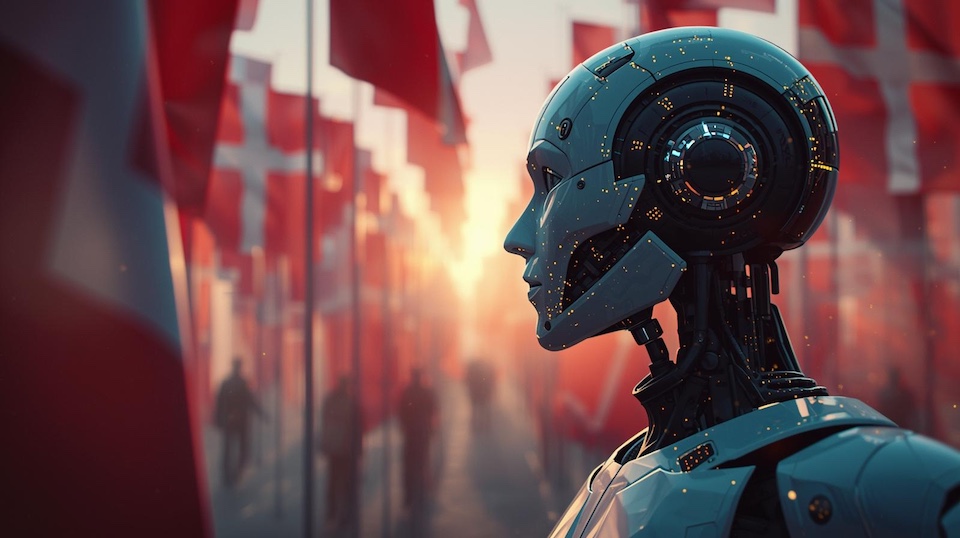
Denmark is pioneering a model where every citizen legally owns their face, voice, body and realistic AI imitation, treating personal identity like intellectual property and creating a template for AI twin sovereignty and monetisation. Over the next decade, this kind of “likeness copyright” plus new creator tools and platforms will determine whether your AI twin pays you—or just enriches platforms and corporations.

Denmark’s model of AI identity rights
- Denmark is moving to amend copyright law so every person automatically owns copyright-like rights over their face, voice and physical likeness, including realistic AI-generated imitations.
- Any AI-generated realistic imitation of a person’s face, voice or body shared without consent would violate the law, giving citizens takedown rights and making platforms liable for failing to remove such content quickly.
- The proposal explicitly reframes identity (image, voice, body and motion) as protectable IP, positioning Denmark as a first European country to recognise personal identity as an asset in the age of deepfakes and generative AI.
Why sovereignty over AI twins matters
- Once likeness is legally an asset, individuals can license AI use of their face, voice, gestures and style rather than having these captured as “training data” and monetised solely by platforms.
- Strong likeness/IP rights are the precondition for: (a) stopping abuse (deepfakes, fraud, non-consensual porn, political manipulation) and (b) enabling positive use such as licensed AI twins generating income while you do other work—or work less.
- Sovereignty also means clear consent trails, standard licences and revenue-sharing norms, so your AI twin is a controllable asset in your personal balance sheet rather than a free resource harvested by corporations.
National moves needed beyond Denmark
- EU-wide, the AI Act already imposes transparency obligations (e.g., labelling AI-generated content), but Denmark’s approach goes further by defining ownership of identity itself; similar amendments could be replicated in other states’ copyright, image and personality-rights laws.
- Other countries are starting with narrower “deepfake” bans and criminalisation (e.g., non-consensual intimate deepfakes, election deepfakes), but typically lack a general, property-like right over one’s likeness that supports licensing and monetisation at scale.
- For genuine sovereignty, nations would need:
- Automatic statutory rights over likeness and voice, with simple registration/verification options for professional creators.
- Platform duties to honour licences and revocations, including interoperable consent and rights registries.
- Default revenue-sharing rules when AI systems commercially exploit a protected identity.
Elon Musk’s “optional work” vision and AI twins
- Elon Musk has argued that in the next 10–20 years, AI and robotics will make work “optional”, likening jobs to tending a vegetable garden you choose to keep even though you can buy food at the shop instead.
- He links this to millions of robots and AI systems massively boosting productivity, with a future where money may become “less relevant” as material needs are handled by automated systems.f
- In that scenario, AI twins—digital agents of your skills, style and persona—become one channel through which your “personal capital” (knowledge, charisma, expertise, audience) can be deployed 24/7, but whether that value accrues to you depends entirely on who owns the identity rights and the infrastructure.
Emerging AI twin monetisation platforms
- Platforms like TwinTone already create “AI creator twins” that replicate a creator’s tone, behaviour and likeness, enabling brands to generate endless social content and live shopping streams while paying the human creator for licensed use.
- These systems typically work by:
- Onboarding: consent video, linking social accounts, training an AI model on your image/voice/behaviour.
- Usage: brands or you generate campaigns, videos and posts via the AI twin, often at scale.
- Monetisation: revenue shares, licensing fees or usage-based payments as the twin appears in branded work.
- Over the next 5–10+ years, expect:
- 5 years: mainstream tools for “personal AI agents” handling routine communication, sales, coaching or support in your name, with basic dashboards for consent, use-logs and payout tracking.
- 10 years: standardised identity wallets where your face/voice/style rights are tokenised, licensed across multiple platforms (marketing, education, gaming, metaverse) with automated smart-contract payments.
- Beyond 10 years: multi-agent “swarms” of your AI twins, each tuned to specific domains (legal, coaching, language markets), operating globally and plugged into tax, pension and estate-planning systems so these assets are inheritable.
How to build and protect your AI twin independently
- Legal and policy groundwork for you personally:
- Explicitly assert your rights in contracts: add clauses for likeness, voice, biometric and AI-usage rights in all media, publishing, coaching and speaking agreements.
- Register and timestamp your content, voice and image datasets (via IP registration, content hashing or Web3-style registries) to evidence provenance if disputes arise.
- Consider a personal “AI identity licence” template stating what uses are allowed (training, generation, commercial vs non-commercial) and under what revenue terms.
- Technical and business strategy for an independent AI twin:
- Build curated, high-quality datasets of your video, audio, writing, style and decision patterns, stored in your controlled infrastructure (self-hosted or tightly governed cloud).
- Use open or self-hostable models for voice cloning, image/video avatars and language models so you can swap vendors without losing control of the underlying persona.
- Wrap your twin in clear APIs and access controls, so brands or partners can programmatically request content or actions with logging and enforceable terms.
- Engagement with national and international policy:
- Support or replicate Denmark-style reforms where you live: lobby for statutory likeness rights, default consent rules and strong platform takedown obligations.
- Push for interoperable digital-identity credentials so you can verify “this AI twin is authorised by Colin” across platforms without re-onboarding every time.
- Encourage regulators to require transparent profit-sharing and usage reporting wherever platforms commercially deploy protected identities at scale.
Handled well, the convergence of likeness-as-IP, AI twin tooling and Musk’s cheap-AI future opens a path where citizens’ digital selves become owned, consent-driven economic engines rather than invisible training data feeding someone else’s balance sheet.
- https://thegoodlobby.eu/denmark-gives-everybody-the-right-to-their-own-body-facial-features-and-voice-to-counter-deepfakes/
- https://www.remotestaff.com.au/blog/denmark-ai-face-copyright-law/
- https://aijourn.com/twintone-transforms-influencer-marketing-with-ai-creator-twins/
- https://fortune.com/2025/11/20/elon-musk-tesla-ai-work-optional-money-irrelevant/
- https://www.musicbusinessworldwide.com/as-ai-deepfakes-spread-denmark-plans-to-give-individual-citizens-copyright-ownership-of-their-face-and-voice/
- https://regulaforensics.com/blog/deepfake-regulations/
- https://www.citma.org.uk/resources/news-policy/student-hub/a-new-sense-of-self-denmarks-copyright-amendment-against-deepfakes-review0126.html
- https://www.vice.com/en/article/denmark-is-fighting-ai-by-giving-citizens-copyright-to-their-own-faces/
- https://www.linkedin.com/posts/oana-leonte_denmark-just-gave-people-copyright-to-their-activity-7348954703394656256-ZmhF
- https://hellopartner.com/2025/07/11/denmark-set-to-be-first-european-country-to-combat-ai-by-giving-citizens-copyright-over-their-face-voice-and-body/